
SBTi’s New Net-Zero Standard: What Businesses Need to Know.
If your business has ever set (or thought about setting) a science-based climate target, you've probably run into the Science Based Targets initiative, better known as SBTi. It's become one of the most trusted names in corporate climate action, helping companies align their emissions goals with what climate science actually says needs to happen.
SBTi recently released Version 2.0 of its Corporate Net-Zero Standard. The new version puts more emphasis on actually doing the work – implementation, accountability, working with your suppliers and customers, and tracking progress over the long haul, not just setting a target and calling it a day.
There’s a lot packed into the standard, so we made this guide to break it down section by section and explain what it means for your business.
A New Way of Grouping Companies
One of the biggest changes in V2.0 is that not every company is held to the same bar anymore. SBTi now sorts businesses into two categories:
Category A: Large companies everywhere, plus medium-sized companies based in higher-income countries.
Category B: Small companies everywhere, plus medium-sized companies based in lower-income countries.
What this means for you: If you land in Category A, buckle up – you're facing stricter requirements, like setting scope 3 targets and getting your emissions data checked by an outside auditor. Category B companies get more flexibility, though SBTi still encourages them to go beyond the minimum when they can.
Climate Goals Now Need to Come From the Top
V2.0 puts a lot more weight on governance – basically, making sure climate goals aren't just a side project for the sustainability team, but something leadership actually owns.
What this means for you:
Your Board of Directors (or equivalent) needs to sign off on and oversee your SBTi targets.
You'll need a real, credible transition plan with key actions, timelines, and how you'll phase out fossil fuels if that applies to you.
If you're Category A, that transition plan has to be made public within 15 months of getting your targets validated.
Category A companies are also encouraged to lend a hand to Category B companies in their supply chain – through funding, training, or sharing tech – to help them build their own transition plans.
Establishing the Baseline for your Targets
Before you can measure progress, you need a starting point – SBTi calls this your base year. V2.0 says companies should pick the most recent year with solid, complete data, so your baseline actually reflects who you are today.
Category A companies also now need a third party to independently verify their base year emissions data. Category B companies don't have to, but it's recommended.
What this means for you: Make sure you have a strong greenhouse gas inventory with accurate, current data. We Are Neutral’s team of environmental mathematicians are pros at making this an easy lift for businesses, so if you need a hand, don’t hesitate to reach out.
Target Setting
Scope 1: Your Direct Emissions
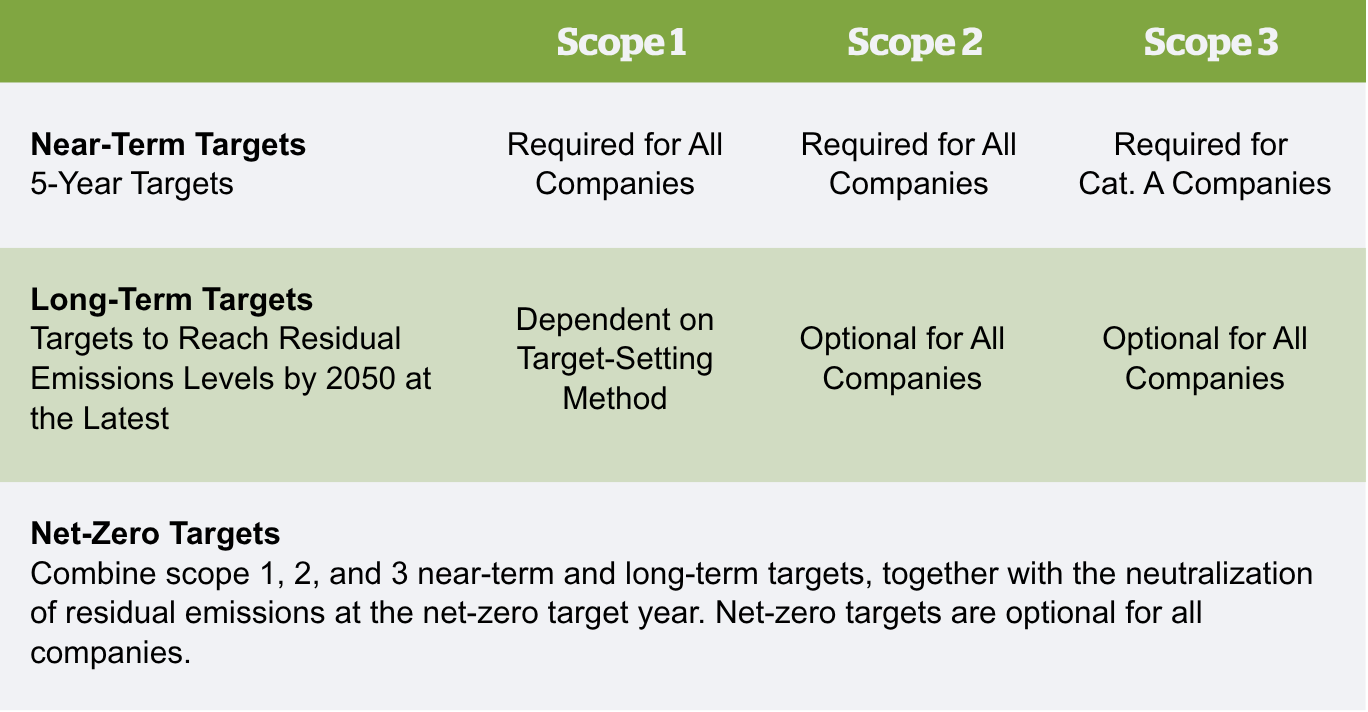
Previously, scope 1 and scope 2 were often lumped together into one target. Now they're split apart, and scope 1 targets have to cover 100% of your direct emissions on a path to net-zero by 2050 at the latest.
You've got three ways to structure this target:
Absolute emissions reduction: Cut your actual emissions on a straight-line path down to near-zero.
Emissions intensity reduction: Follow emissions-reduction benchmarks specific to your sector
Asset transition: A new, practical option that lets you build an Asset Decarbonization Plan to retire or upgrade the specific equipment and assets producing your emissions, on a realistic timeline tied to when you'd replace them anyway.
All companies must set near-term (5-year) scope 1 targets. A long-term target is only required if you go with the intensity reduction or asset transition routes for your near-term targets.
Scope 2: Purchased Electricity, Heat, Steam and Cooling
Scope 2 covers emissions from the electricity, heat, steam, and cooling your company purchases. For these emissions, the basic requirements are the same for everyone: near-term targets are mandatory, long-term targets are optional.
When setting these targets, you have two options:
Low-carbon electricity (LCE) alignment targets: Steadily increase the share of low-carbon electricity you use, contract, or match over time.
Absolute emissions reduction targets: Cut your scope 2 emissions on a straight path down. This option is required if your electricity use is growing rapidly (looking at you, data centers).
You can pick whichever fits your business – unless your electricity demand is growing fast (looking at you, data centers), in which case you're required to go with an emissions reduction target.
One of the biggest changes in V2.0 is how these targets are measured. Previously, companies could set scope 2 targets using either location-based or market-based emissions accounting. Under the new standard, all scope 2 targets must be anchored to your company's physical, location-based emissions inventory.
That doesn't mean tools market-based actions are out – they're still a valid, important way to make progress toward your broader net-zero goals. They just now get reported separately from your inventory-based numbers, so it's transparent what's actually changing in the physical grid versus what you're funding through purchases.
V2.0 also raises the bar for which purchases actually count, around three principles: near (it should serve your own grid, not one on the other side of the world), new (it should come from newer projects, so you're funding new capacity, not existing power), and now (the long-term goal is matching your usage to clean generation hour by hour, called hourly matching, rather than balancing it out annually). Hourly matching isn't required for hitting your target yet – annual matching is still the standard – but larger companies with significant electricity use already have to publicly report their hourly matching performance.
Scope 3: The Big, Messy One
Scope 3 covers everything happening in your value chain – from the goods you purchase to how customers use (and eventually toss) your product. It's usually the largest chunk of a company's footprint, often 70–90% of total emissions, and also the hardest to control since it's not really "yours" – it belongs to your suppliers, partners, and customers.
The good news is V2.0 takes a more realistic approach here. Category B companies aren't required to set scope 3 targets at all (though it's encouraged), and long-term scope 3 targets are optional for everyone.
Category A companies must set near-term targets for their scope 3 emissions, though the framework also changes in V2.0. Instead of forcing companies to cover a fixed percentage of everything, it uses a significance threshold: companies must address any scope 3 category that makes up 5% or more of their total scope 3 footprints. Certain exclusions are allowed, but they must be explained and justified – no quietly sweeping things under the rug.
Again, SBTi offers several options for these targets:
Absolute reduction targets: Straight-line cuts to total scope 3 emissions.
Supplier/customer alignment targets: Get more of your suppliers or customers on board with their own climate targets.
Category or activity specific targets: Tailor your targets to specific scope 3 categories or activities, so you can focus on areas where you have stronger influence.
What this means for you: If scope 3 has felt overwhelming, V2.0 is a bit of a relief. Smaller companies get flexibility to grow into it, and larger companies can concentrate their efforts where they'll have the most impact, instead of spreading themselves thin trying to cover everything at once.
Source: Corporate Net-Zero Standard V2.0
Target Implementation
Okay, We Have Targets. Now What?
While the foundational Corporate Net-Zero Standard laid the groundwork for setting targets, V2.0 helps ensure you actually get there.
One key addition is what SBTi calls an implementation hierarchy – basically, a priority order for how you should be reducing your footprint:
Direct actions - Fix things in your own operations and value chain first – efficiency upgrades, switching fuels, working directly with suppliers and customers.
Activity pool-level actions - Take action within the broader systems you rely on, like your local electricity grid or logistics networks.
Sector-level actions: If you're boxed in by circumstances outside your control, you can support broader shifts across your industry instead, as long as these actions mirror the relevant emissions sources and support the transition of the sector.
If your company faces structural barriers to reducing emissions directly, SBTi allows you to use certain market instruments such as energy attribute certificates, commodity certificates, book-and-claim systems, and mass-balance models to support your climate goals. To use them, you'll need to demonstrate that they are credible, transparent, and linked to the emissions they are intended to address. Additional third-party integrity requirements are expected in the future, although SBTi has not yet finalized those details.
One of the most pragmatic additions to V2.0 is the best-efforts provision. If you've used all the tools available to you, documented the roadblocks you hit, and reported honestly, you can stay in good standing even if you didn't hit every single target perfectly.
What this means for you: Work through the hierarchy in order – fix what's in your own operations first, then look at shared systems like your grid or supply chain, and only lean on market instruments when direct action isn't possible yet. And don't be afraid to set an ambitious target – the standard now has some grace built in for good-faith effort.
Ongoing Emissions Responsibility (OER)
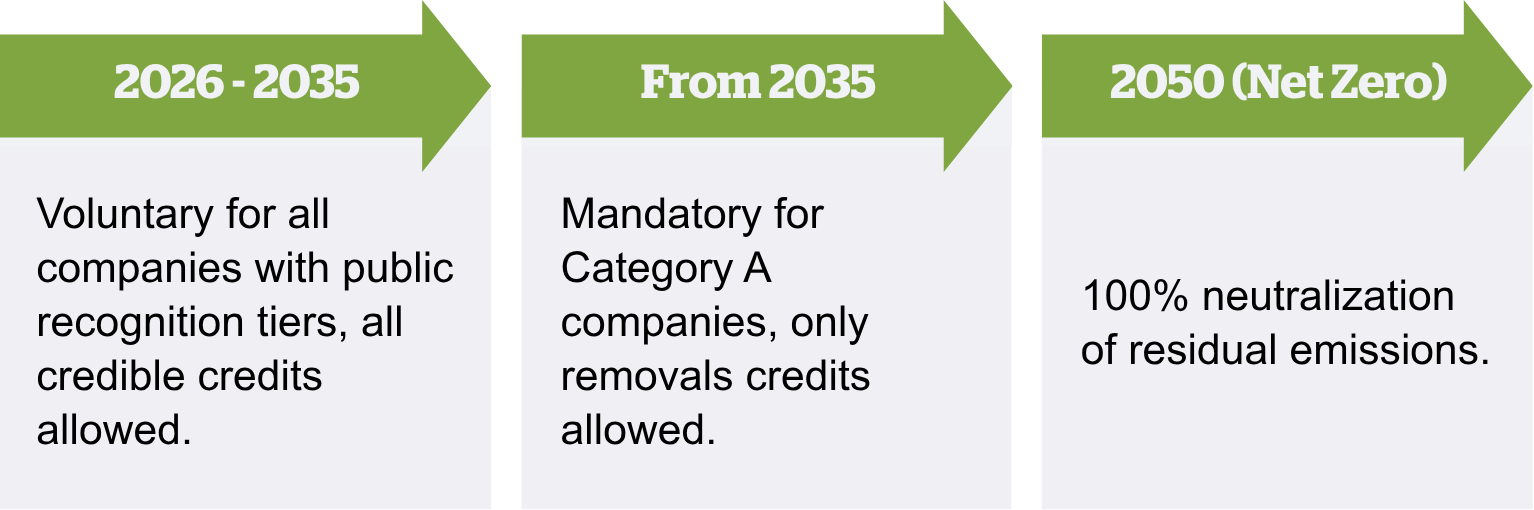
Last but not least is the Ongoing Emissions Responsibility (OER) framework, which replaces the old "Beyond Value Chain Mitigation" guidance. It encourages companies to fund verified climate action outside their own value chain – think high-quality carbon credits – while they work on their own emissions.
Right now, this is voluntary, but it's on a clear path toward becoming mandatory:
Source: Corporate Net-Zero Standard V2.0
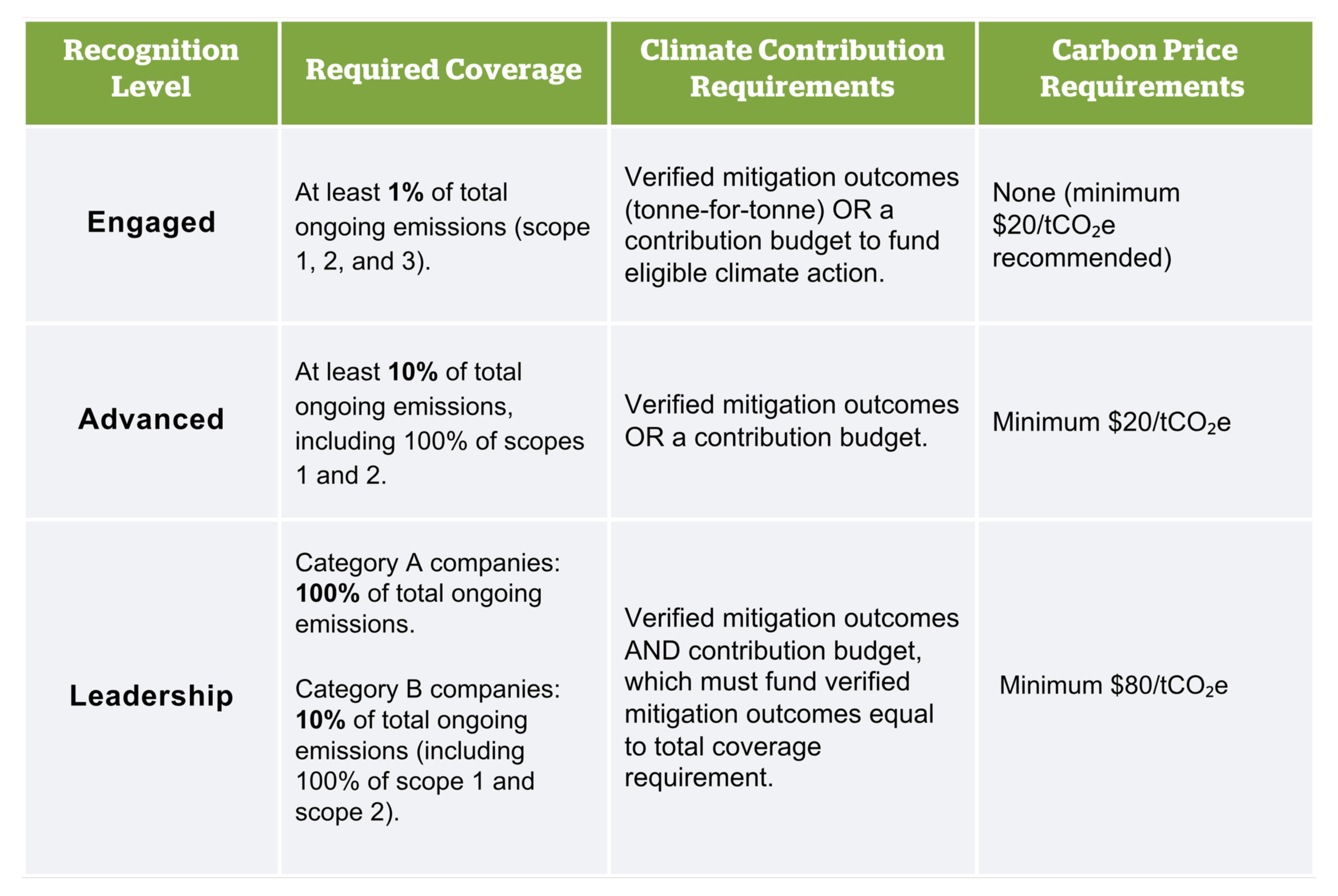
Companies who get a head start on their ongoing emissions reductions can earn one of three designated voluntary recognition levels from SBTi: engaged, advanced, or leadership. Since the OER framework serves to complement, not replace, emissions reductions, your company must also meet a performance threshold in your reduction targets in order to qualify for OER recognition.
The requirements vary be recognition level and company category:
Source: Corporate Net-Zero Standard V2.0
What this means for you: This is a great way to start building climate leadership credibility now, while credits are more available and less expensive, instead of scrambling once it becomes a requirement.
But there's a reason SBTi kept this voluntary for now – figuring out which carbon credits meet their strict integrity criteria (things like verified permanence, no double counting, real additionality) isn't simple, and the market is full of greenwashing and credits that won’t hold up to scrutiny. At We Are Neutral, we rigorously research and evaluate projects, review third-party assessments, and stay up-to-date with emerging standards. Learn more about our approach to carbon credits here.
The Bottom Line
SBTi's V2.0 marks a shift from "set a target and move on" to "show us you're actually making progress." It raises the bar on transparency and accountability, but it also builds in more flexibility than before – recognizing that a five-person business and a multinational corporation shouldn't be held to the same standard.
No matter where your organization is in its climate journey, here are a few practical takeaways to help turn these requirements into action:
Build a strong emissions inventory: You can't manage what you haven't measured accurately. If you’re not sure how to go about measuring your emissions data, We Are Neutral can help.
Engage your value chain: Start talking to your suppliers and customers now, even if scope 3 targets aren't required for you yet.
Build your transition plan: Know your key actions, timelines, and who's responsible for what.
Lead with your climate goals: Integrate climate action into your company’s decision making rather than treating sustainability as a standalone initiative.
Prepare for what’s next: Exploring the OER framework – and its tools like climate contributions and internal carbon pricing – can help you support climate action beyond your own operations while staying ahead of emerging expectations and market trends
You don't need to tackle all of this at once – and you don't have to do it alone. Whether you need help measuring your emissions, setting science-based targets, developing a transition plan, or sourcing high-integrity carbon credits, We Are Neutral can make it an easy lift. Our team works with organizations of all sizes to build practical, credible climate strategies that turn commitments into measurable action.
Looking for guidance on where to begin (or where to go next)? Reach out to We Are Neutral for a free consultation!